Habits
Why You Keep Breaking Habits (The Psychology of Quitting)

Key takeaway
You’ve started this habit before. Maybe several times. You know exactly how it goes the first week feels good, something gets in the way around day ten or twelve, you miss one day, and then somehow the whole thing is over.
Not slowly over. Immediately over.
That’s not a discipline problem. That’s a pattern a documented psychological sequence that plays out the same way across thousands of people trying to build the same habits. Understanding why you keep breaking habits doesn’t require more motivation. It requires looking honestly at the mechanics involved: how your brain responds to slipping, what shame does to behaviour, and why most of the tools designed to help are quietly making things worse.
This isn’t a post about how to finally get it together. It’s a diagnosis. And the first thing a diagnosis has to do is stop blaming you for the symptom.
The Slip Wasn’t the Problem What Came After It Was
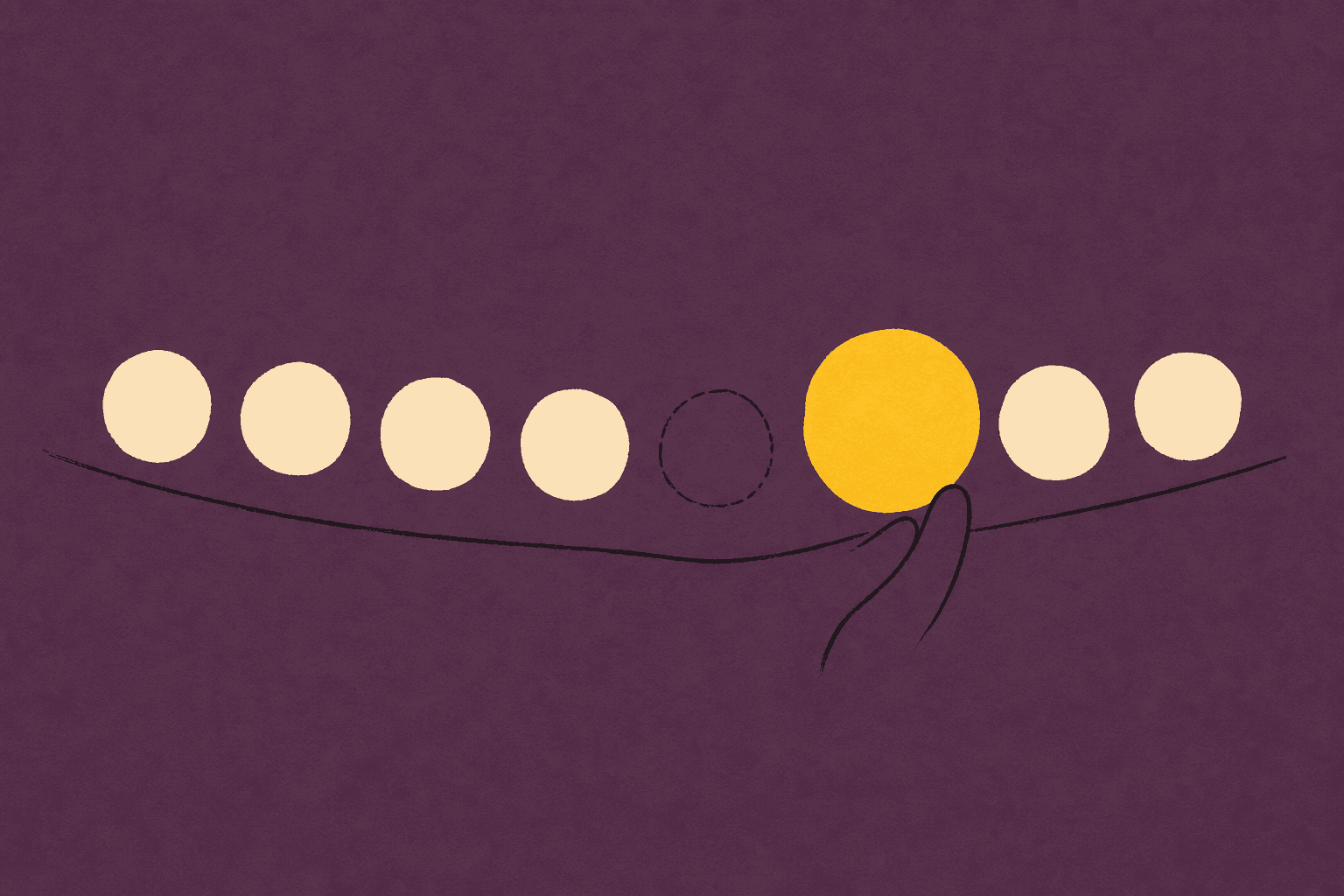
Most people assume the habit broke when they missed the day. It didn’t. The habit broke in the hours and days that followed, when a single missed session turned into complete abandonment.
This pattern has a name: the what-the-hell effect. It describes the moment a small slip tips over into total surrender. You missed your run this morning what the hell, you’ve already ruined it, might as well skip the rest of the week. You broke your no-sugar streak what the hell, the streak’s gone anyway, might as well finish the whole packet. You missed your meditation what the hell, you’re clearly not someone who meditates, you never were.
The what-the-hell effect isn’t a personality flaw. It’s a predictable cognitive response to an all-or-nothing mental framing the belief that a goal is either intact or it’s destroyed, with no middle ground. Once the frame breaks, the brain stops trying to protect what’s left.
What makes this so insidious is that it masquerades as logic. It feels completely reasonable to stop pulling against something that’s already gone. But the frame was wrong from the start. One missed workout didn’t undo the previous eleven. One missed day didn’t reset your body, your brain, or your actual ability to continue.
The streak reset did.
When an app or a paper calendar, or a wall chart, or your own internal accounting treats a single miss as a full reset, it doesn’t just record a failure. It confirms the all-or-nothing frame. It tells you the story your brain was already telling you: that you’ve started from zero. And once you’re at zero, why not stay there a little longer?
Why a Single Miss Feels Like Complete Failure
All-or-nothing thinking in habits isn’t irrational. It’s a natural extension of how perfectionism functions as a self-protection strategy.
Perfectionists don’t hold high standards because they love excellence. They hold high standards because falling short of them feels catastrophic. The goal isn’t the goal it’s the maintenance of an identity that’s conditional on success. And when that identity depends on a perfect record, a single crack doesn’t feel like a crack. It feels like the whole structure coming down.
This is why a single missed gym session can register psychologically the same as quitting the gym. The miss doesn’t just represent the lost workout. It represents evidence about who you are. And if the evidence suggests you’re someone who misses workouts, the safest cognitive move is to stop expecting otherwise.
Perfectionism protects you from the pain of trying and failing repeatedly by giving you a clean, decisive exit at the first failure. You didn’t fail at the habit. You decided the habit wasn’t for you. That reframe feels like agency. It isn’t.
This is also why why habits don’t stick has almost nothing to do with the habits themselves. The habit wasn’t too hard. The morning routine wasn’t too early. The run wasn’t too long. What collapsed was the tolerance for imperfection the ability to miss once and keep going as if the miss was just a miss, not a verdict.
Building that tolerance isn’t about lowering your standards. It’s about separating your behaviour from your identity, temporarily. What you did today doesn’t tell you who you are. It tells you what happened today. Those are different things, and keeping them separate is one of the most structurally important pieces of habit psychology that almost no tool actually supports.
The Shame Spiral Accelerates Quitting It Doesn’t Prevent It
Here’s something that gets ignored in almost every conversation about habit consistency: shame doesn’t work.
Not just poorly. Not just sometimes. It reliably moves behaviour in the wrong direction.
When you feel guilty about breaking a habit, the guilt creates a secondary problem on top of the original one. Now you’re not just dealing with the missed day you’re managing an emotional state that’s uncomfortable to sit with. And the fastest way to stop feeling guilty about something is to stop engaging with it entirely.
So you delete the app. You stop weighing yourself. You avoid looking at the journal you haven’t written in. The shame spiral doesn’t make you recommit it makes recommitting feel even more loaded than it already was, because now returning means confronting proof of how long you were gone.
Streak mechanics that reset to zero on a single miss are functionally a shame delivery system. Every time you open the app and see a zero, you’re being reminded of your failure. The app isn’t helping you restart it’s making the cost of returning higher every day you wait.
This is structurally backwards from how recovery psychology actually works. When someone slips, the thing that helps them re-engage isn’t a louder reminder of how far they’ve fallen. It’s a lower barrier to getting back. It’s the sense that the slip was contained, limited, survivable that what’s left is still worth protecting.
Guilt, by contrast, doesn’t contain the slip. It expands it. It fills the gap between the miss and the return with evidence of inadequacy, and it keeps accumulating interest the longer you stay away.
An app that resets your streak at the first miss isn’t neutral. It’s making the shame spiral more likely, not less. It’s punishing you at exactly the moment when the psychology says you need support.
The Willpower Model Is a Trap
At some point, someone a parent, a coach, a podcast, a passing comment taught you that consistency was a character test. That the people who keep their habits are the ones who want it more, who have more discipline, who are simply built differently.
This is why discipline doesn’t work as a framework for habit change. Not because discipline is irrelevant, but because framing it as a fixed character trait something you either have or you don’t makes failure permanent and personal rather than situational and fixable.
The willpower model works like this: you have a reserve of self-control, and every act of discipline draws from it. When the reserve runs out, you fail. And when you fail, it’s because your reserve was smaller than you needed it to be. Which means you, the person, were insufficient.
This framing turns every broken habit into a verdict on your character. And it turns recommitting to a habit into an act of defiance against a verdict you’ve already internalised. Most people don’t bother.
The research direction here whatever the specific numbers points consistently away from willpower as the primary mechanism of habit change. What actually drives consistency is environment, system design, and the reduction of friction around the behaviour itself. Habits stick when they’re easy to continue, not when the person trying to maintain them is gritting their way through every session on sheer determination.
Willpower matters at the edges for starting something new, for resisting a very specific and immediate temptation. It’s not a renewable resource you can train into abundance, and it’s not what separates people who keep habits from people who don’t. What separates them, more often, is structural support: systems that make continuing easier than stopping, and that treat a slip as information rather than failure.
When you frame habit-breaking as a willpower problem, you turn every miss into a character flaw. And character flaws, unlike systems, can’t be redesigned.
How Streak Resets Are Structurally Rigged Against You
Standard habit trackers operate on a simple mechanic: maintain the chain, or start over. Miss one day, lose everything. It looks clean. It looks rigorous. It’s psychologically backwards.
The problem isn’t the streak itself streaks create momentum, and visible progress is genuinely motivating. The problem is the reset condition. When a streak resets at the first miss, it removes the incentive to recover at exactly the moment recovery is possible.
The psychological window after a single miss is critical. The habit isn’t gone yet. The behaviour pattern is still there. The motivation that started the streak hasn’t evaporated. What’s happened is a single disruption a late night, an illness, a difficult day that broke the chain but didn’t break the commitment.
A mechanic that resets at that moment doesn’t just erase the number. It confirms the all-or-nothing frame. It says: the single miss was enough to end this. Which is precisely the story the what-the-hell effect was already trying to tell you.
The mechanic and the cognitive distortion are pointing in the same direction. The tool is validating the psychology that causes quitting. And then, when you quit, it’s easy to tell yourself the problem was your discipline not the fact that your tool punished you for being a person who occasionally has a difficult Tuesday.
This is why the two-day rule has quietly become the framing that actually maps onto habit psychology. Missing once is human. Missing twice in a row is the pattern that needs interrupting. The first miss doesn’t need punishment it needs a second chance. The second miss is where the real signal is.
When you understand this, you start to see that most habit trackers aren’t designed around how habits actually form and break. They’re designed around a fantasy version of consistency one where motivated people never slip, and slips mean failure. That fantasy serves the product narrative (the unbroken chain looks impressive) but it fails the user the moment reality intervenes.
The Identity Gap That Makes Quitting Feel Permanent
There’s a point in every abandoned habit where the internal story shifts. It stops being “I’ve been struggling with this” and becomes “I’m just not someone who does this.”
That’s the identity gap and it’s where quitting stops being a temporary state and becomes a self-concept.
Identity labels are efficient cognitive shortcuts. “I’m not a morning person” means you don’t have to relitigate the alarm clock every day. “I’m not a runner” means you don’t have to feel guilty about every skipped run. “I’m just not consistent” means you have a tidy explanation for every broken habit that requires no further investigation.
The problem is that identity labels run in both directions. The same mechanism that locks in “I’m not consistent” is the one that can lock in “I’m someone who shows up most days.” The difference isn’t personality it’s the accumulation of small behavioural evidence.
Behaviour shapes identity, not the other way around. You don’t become a person who exercises by deciding you’re an exerciser. You become one by exercising, imperfectly, across enough days that the evidence tips. A single miss doesn’t tip it back the other direction but a reset streak, a shame spiral, and a deleted app absolutely can.
This is why what to do when you break your streak matters more psychologically than people give it credit for. The recovery behaviour the act of returning is itself identity-building. Every time you come back after a slip, you’re adding a data point to the story that says: this is someone who comes back. That data point is more durable than a 30-day unbroken chain, because it’s been tested.
The people who maintain habits over years are almost never the ones who never missed. They’re the ones who missed and came back so many times that the return became automatic. The habit of returning is, in the end, the only habit that actually matters.
And that habit is nearly impossible to build if your tool deletes your progress every time you practise it.
Why Standard Habit Trackers Fail at the Worst Possible Moment
Put all of this together the what-the-hell effect, all-or-nothing thinking, the shame spiral, the willpower myth, the identity gap and you get a picture of why habit tracking apps have such a high delete rate.
It’s not that people don’t want to build habits. It’s that the tools are designed around a model of human behaviour that doesn’t survive first contact with actual human behaviour.
Streak mechanics that reset at the first miss make perfect sense if you assume people are rational agents who respond to negative reinforcement by trying harder. They make no sense if you understand that most people, after a streak reset, don’t try harder they disengage entirely, feel vaguely guilty for a few days, and then reinstall a new app two months later and try the whole thing again from scratch.
You can see this pattern in how people talk about habit apps. The complaint isn’t “the app didn’t remind me enough” or “the design was confusing.” It’s “I missed one day and my streak reset and I just couldn’t bring myself to start over.” The mechanic did exactly what it was designed to do. It just did it at a moment that made recovery harder instead of easier.
The alternative isn’t to remove accountability. Accountability matters the second miss is exactly where it belongs. But there’s a meaningful structural difference between an app that holds you to account for falling into a pattern versus one that treats every single human imperfection as a full reset.
The App That Was Built Around This Problem
Don’t Skip Twice exists because of this exact mechanic failure. Not as a workaround, or a softer alternative, or a version of habit tracking for people who “can’t handle” real accountability but as a structural response to the documented psychology of how habits actually break.
The rule is the product: never miss twice in a row.
Miss once your habit turns amber. Your streak is still alive. You haven’t failed yet. You’ve just used your one human slip, and the app holds that information clearly without punishing you for it. The streak lives.
Miss twice it resets. That’s the real signal. That’s where the pattern starts. That’s where the app puts the accountability, because that’s where the psychology says it belongs.
This isn’t a forgiveness mechanic bolted onto a normal tracker. It’s the entire design philosophy. The app holds you to the second day precisely because it doesn’t hold you to the first. The amber state after a miss isn’t just a visual it’s a reminder that you still have something worth protecting, and that the decision you make tomorrow matters more than the one you got wrong today.
The practical features follow from that philosophy: a calendar heatmap that shows your real history across time (not just your current run), home and lock screen widgets that put your habits in front of you without ceremony, custom reminders you can time to your actual life, and support for as many habits as you’re tracking at once.
But the mechanic is what makes the difference. Because without the right mechanic, the features are just decoration on a system that’s going to fail you the first time you have a hard week.
If you’ve looked for a best habit tracker for iPhone and kept running into the same reset problem, this is the structural answer. Not a gentler version of the same tool. A different tool.
Don’t Skip Twice is available on a 7-day free trial. The rule is built in from day one.
Frequently Asked Questions
Why do I keep starting and stopping the same habits?
Starting and stopping is usually a sign that the habit itself isn’t the problem the recovery mechanism is. Most people who restart the same habit multiple times are perfectly capable of maintaining it through the easy stretches. What breaks them is the first slip: a reset mechanic that confirms the all-or-nothing frame, a shame spiral that makes returning feel loaded, and a tool that punishes exactly when support is needed most. The pattern repeats because none of those things change between attempts.
Is all-or-nothing thinking a real psychological pattern?
Yes. It describes a cognitive style where outcomes are evaluated in binary terms complete success or total failure, with no middle ground. In the context of habits, it’s the reason a single missed day can feel identical to having never started. The pattern is reinforced when external systems (like streak-reset mechanics) validate the same binary framing, making the cognitive distortion feel like an accurate read of the situation rather than a distortion at all.
Does missing one day actually ruin a habit?
No. Missing one day disrupts a streak counter. It doesn’t undo the physiological or neurological changes that build over days of consistent behaviour. It doesn’t reset your body, your skill level, or your actual capacity to continue. What it can do is trigger the what-the-hell effect the pattern where a small slip becomes permission for total abandonment. That’s a psychological response, not a physical reality. The habit survives the miss. The question is whether the tool and the mental framing make it easy or hard to return.
Why does breaking a habit feel like a personal failure?
Because most habit systems and the cultural narratives around discipline are designed around the willpower model: the idea that consistent people succeed because of who they are, not what their systems look like. When a habit breaks, that model doesn’t leave room for situational explanations. It leaves room for a verdict about your character. The feeling of personal failure is the willpower model working exactly as designed. It’s just not working in your favour.
What’s the difference between motivation and habit?
Motivation is a state it comes and goes, responds to mood and circumstance, and cannot be reliably scheduled. Habit is a structure a behaviour that has been repeated enough times in enough consistent contexts that it runs with less conscious friction than it used to. Motivation can start a habit. It can’t maintain one long-term, because it isn’t designed to. Waiting to feel motivated before continuing a habit is the same as deciding the habit only exists on days when everything is already going well which is exactly when you need it least.
Don’t Skip Twice is the habit tracker built on one rule: never miss twice. Free for 7 days. Click here to try for free today.
Keep exploring the ideas behind habit momentum and realistic accountability.